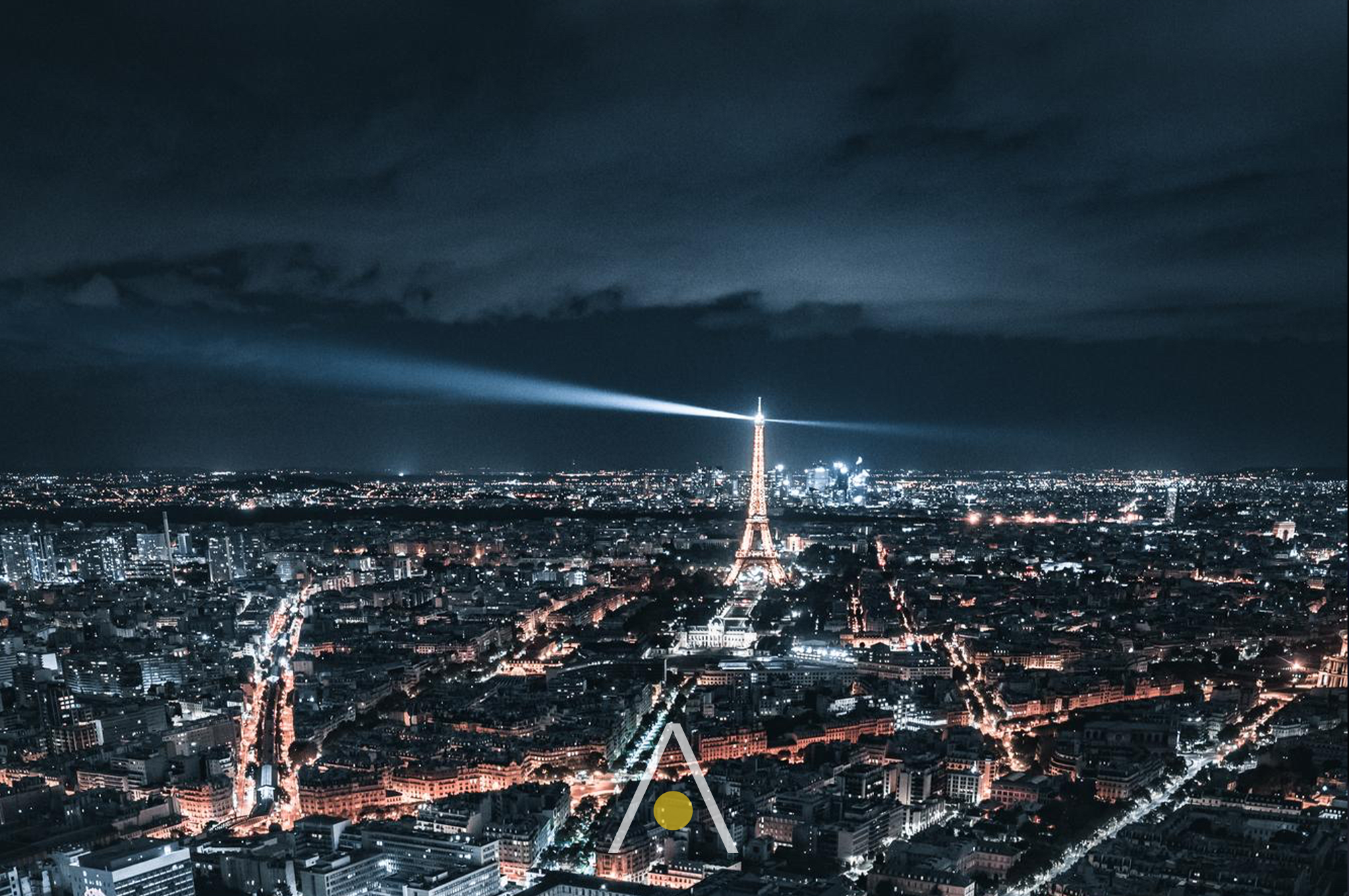
Paris has always been a city that shines even when everyone else sleeps. From the golden glow of the Eiffel Tower to the reflections on the surface of the Seine, light is its signature. Back in the 19th century, it became known as the "City of Light" for being one of the first European capitals to introduce gas street lighting. Today, in the 21st century, that symbol of modernity is taking on a new, cooler shade — blue.
Blue light, the high-frequency and high-energy part of the spectrum between 380 and 500 nanometers, naturally comes from the Sun, giving the sky its blue appearance. However, with the development of technology and modern urban living, humans have become exposed to an entirely new, artificial source of this radiation. LED diodes, screens, neon signs, and modern facades lit with cool tones have become a part of everyday life. Paris, once glowing warmly in golden tones, now in many areas shines cold blue at night. This visual aesthetic symbolizes technological progress, but also raises the question of how this change affects us.

Biological clock in the era of artificial light
The human body has evolved for millions of years in accordance with natural day-night cycles. Our circadian rhythm, that internal biological clock, aligns physiological processes with the alternation of light and darkness. When the sun sets, the reduction of light stimulation naturally triggers the release of melatonin — the hormone that signals the body it is time to rest.
In modern cities like Paris, where the lights never go out, this ancient rhythm becomes disrupted. Blue light has a unique ability to affect special cells in the retina that are not used for vision, but only to measure the amount of light in the environment. They send signals directly to the part of the brain responsible for our biological clock. Exposure to blue light in the evening practically "tricks" the brain into believing it's still daytime. Melatonin release is delayed, sleep is postponed, and the consequences go beyond simple insomnia — chronic fatigue, weakened immunity, and metabolic imbalance occur. Paris becomes a symbol of the modern paradox: the desire for eternal activity in an environment that has forgotten darkness.
Eyes under high-energy exposure
On the level of the eye itself, the problem is physical. Blue light penetrates deeper into the structure of the eye, and its high energy can cause oxidative stress that damages cells. Particularly sensitive are the parts of the retina responsible for central vision and color perception. Although our eyes have natural defense mechanisms and antioxidants, they were not designed for constant, chronic exposure to artificial sources. When these resources become exhausted, permanent changes may occur, and scientific research increasingly links intensive blue light exposure with accelerated development of macular degeneration.

A thin line between medicine and harm
Still, it is important to remember that blue light is not exclusively an enemy. Its nature is dual. In medicine, it is successfully used, for example, in the treatment of jaundice in newborns or for accelerating tissue regeneration. A similar balance applies to everyday life — natural daylight, rich in blue spectrum, is essential for wakefulness, concentration, and good mood. The problem begins when that spectrum carries into the night. While it helps us function during the day, screens and LED lighting at night lead to digital fatigue and sleep disruption.
Paris as a mirror of modern life
Observing Paris at night reveals a mesmerizing sight. Bridges, streets, and monuments shine brightly. But behind that spectacle lies a change in lifestyle. Urban residents spend most of their time indoors, often under artificial lighting that disrupts natural balance. In Paris, where nightlife is part of cultural identity, the line between day and night becomes blurred. Studies in such urban environments show a clear correlation between light pollution and increased anxiety, cardiovascular problems, and depression.
Our body has an incredible capacity for adaptation, but the hormonal system — from cortisol to serotonin — depends on a clear signal of when to be awake and when to sleep. Prolonged exposure to blue light at night creates neurohormonal confusion that affects not only the body, but also the mind.
Between light and darkness
Blue light has become a symbol of the rhythm of modern life: it boosts alertness and productivity, yet disturbs natural balance. Paris, as a global capital of culture and technology, perfectly reflects this duality — a city powered by its light, but one that must learn how to manage it. The solution is not darkness, but conscious use of technology. More natural light during the day, and warmer, dimmed lighting at night help the body return to balance.
The phenomenon of blue light goes beyond medicine — it is a matter of lifestyle. To the extent that we learn to use light consciously, respecting biological rhythms, we can enjoy its beauty and the advantages of modern times without compromising what makes us human — our unbreakable connection with natural time.